Team structure and team trust are two sides of the same problem.
Cultivating a great team takes both sides of the brain—experience architecting solutions, and the ability to bring a group together to bring it to life.
A big firm brings you rigorous analysis and a high price tag. Most independents bring warmth and a nice workshop, but struggle to fully design, build, and execute. I've built my career working both sides of that line.
I spent ten years at Bain in People & Organization, running intimate workshops and inclusive design processes, while building machinery (and actual software) for designing organizations. Before that, I taught high school, where a hundred people a day did not have to listen to me.
Now, I work with a small set of clients on org design, transformations, culture, team trust, and change management. I blend the analytics, process, design, and the felt experience of your team. My goal is to be deeply hands on—building a smart answer, but also one that feels good for everyone involved.
Three things I believe about working on, and with, organizations and teams.
Org structure, and how you work together, should be designed together, and follow from strategy.
You need an org chart. But that org chart, the incentives at play, the decision rights, and the way people live—and relate—inside it needs to feel cohesive, flow from your strategy, and have real investment from your team.
Benchmarking is an input, not an answer.
What five peer companies did is useful context and terrible design. Benchmarks for organizations tell you a piece of the puzzle. Every organization is different, with a different strategy, different humans, and different constraints. The real work is in reading between the lines—and listening to your team, your results.
The work itself is the intervention.
Everyone says involve the people affected. Fewer people design the process so that being involved is the thing that changes how they work together. Done right, the diagnosis and the design are the change effort — your team leaves more honest and bought in, because they built it.
I build the thing, not just the recommendation.
Most consultants sell judgment and slides. I do too. The difference is that when the work needs an instrument that doesn't exist — a diagnostic, a model, a tool your team is still using next year — I help you design and build it instead of scoping a vendor.
At my prior firm, I helped develop our org design software platform as user #1, and scaled it past 100 deployments and roughly $10M in annual revenue. Then I built my startup, Ligare from nothing: a personality taxonomy, a matching algorithm, an AI pipeline that writes a letter for every guest, and webapps to grow my community of guests and hosts. I design systems, ship them, and use them myself.
- Global technology. New enterprise operating model, built daily with 30+ executives. ~$30M in annual run-rate savings.
- Global QSR. Rebuilt global structure and the role of regions versus the center, across ~20 co-creative workshops.
- Energy. Led a 100-person diagnostic integrating surveys, network analysis and interviews to find the real bottlenecks.
- Public endowment. Ongoing counsel to the COO on strategic priorities and the organization built to deliver them.
My whole life has been one question, asked four ways.
How do humans get things done, and come together, in groups?
Religious studies, NYU. I studied how we bind together and become communities: ritual, shared meals, gathering. The tools that humans have used forever to build groups out of individuals.
Teach For America, 2009–2013. 4 years in public schools with a hundred clients a day who don't particularly want to do what you need them to do. Teaching is a daily exercise in reinventing your operating model for change.
MBA, Yale School of Management, 2013–2015
Bain & Company, 2015–2025. Ten years, leaving as an Expert Associate Partner in People & Organization, with work across industries. Deep expertise in operating model transformations, culture change, talent strategy, and the tools and benchmarks world class firms use to design and drive change.
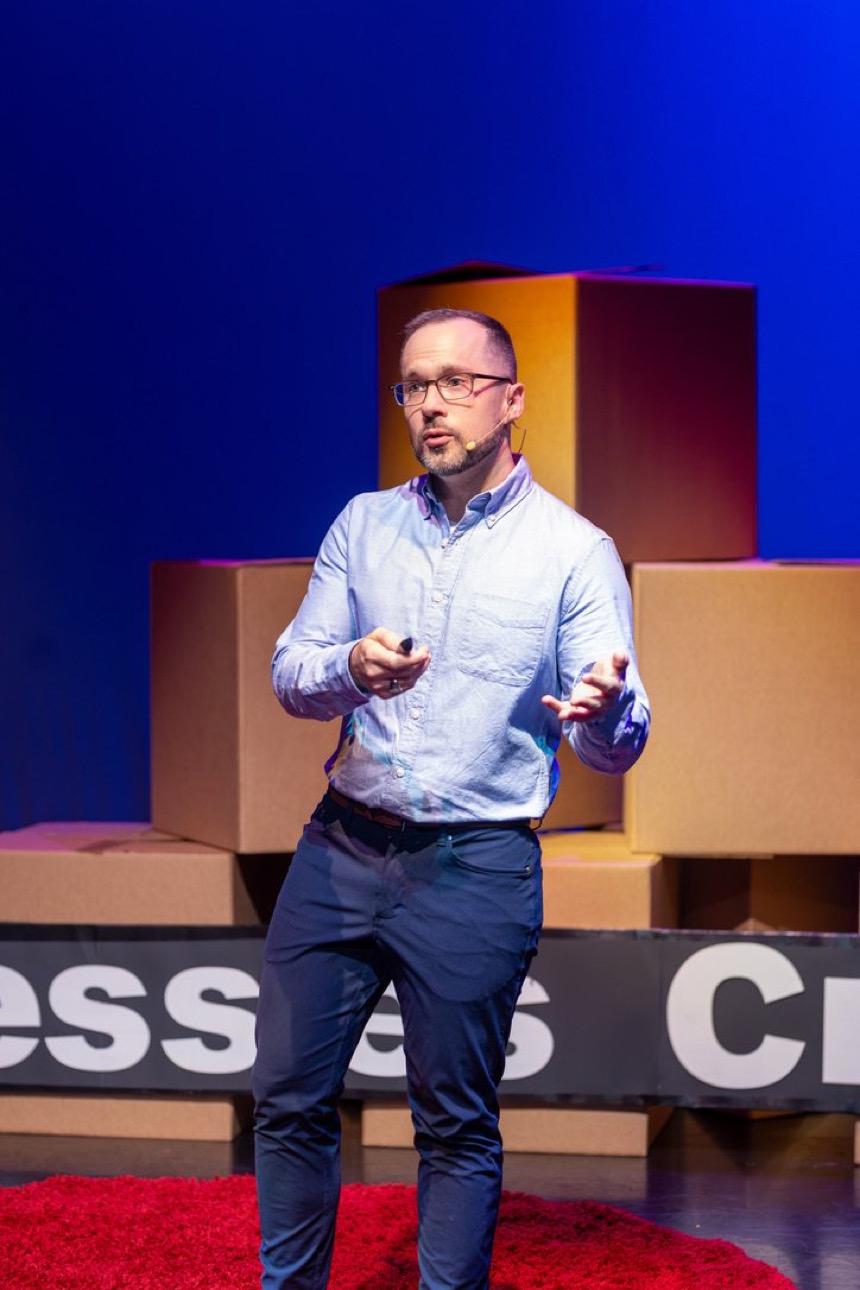
Ligare Gatherings, 2025 to now. Building community and third places through gatherings over games, using everything I learned along the way. I gave a TEDx talk about what I've learned: most of us don't need more friends, but we do need more strangers, and something material to do with them that creates real bonds.
The solution should fit the problem.
I work with teams and organizations in a few ways—the best way to size it is to get in touch.
-
01
Read the team honestly.
Interviews, the data, and some real time together — sometimes a game night with real conversation to open the group up, because people tell you different things once they've actually connected over life, not last quarter's results.
-
02
Fix what's broken—structure, team trust, or how we work.
Sometimes that's the org chart or a missing capability. More often it's who decides what, whether your executive meetings decide anything, and how the strategic priorities actually get run — and by whom.
-
03
Stay in it with you.
A standing hour with a leader through the part where a design either sticks or doesn't.